









- Forum
- categories
- Markets, finance and governance
- Sanitation as a business and business models
- Progress so far ... Sanitation Service Delivery Program (PSI with PATH and WSUP, funded by USAID) - Ghana, Ivory Coast and Benin
Progress so far ... Sanitation Service Delivery Program (PSI with PATH and WSUP, funded by USAID) - Ghana, Ivory Coast and Benin
268k views

- USAIDssd
-
- SSD is a sanitation program funded by USAID, which aims to create sustainable sanitation market for the urban poor in Benin and Côte d'Ivoire. This market will elicit a demand for sanitation services and a reliable supply of high-quality sanitation products and services.
Less- Posts: 50
- Karma: 1
- Likes received: 9
Re: SSD tests the integrity of sanitation facilities constructed for households in year 5 of implementation

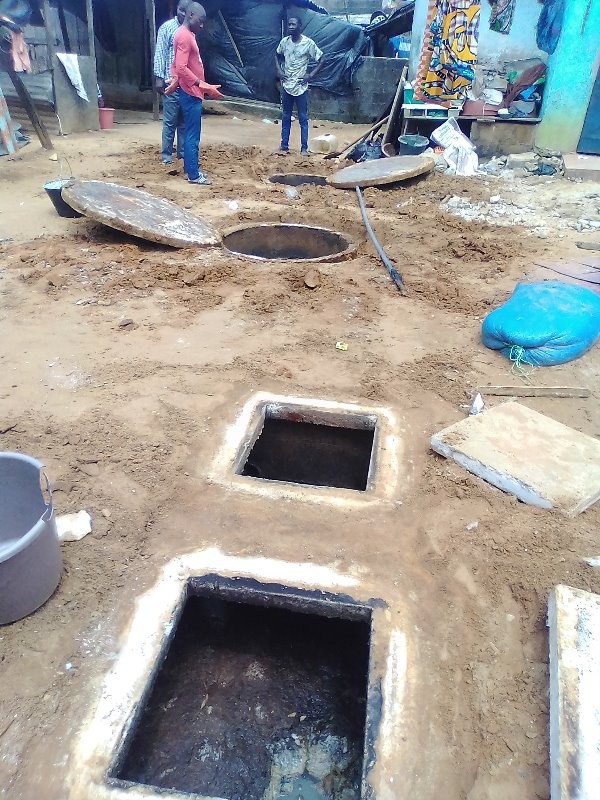
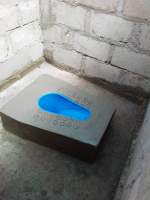
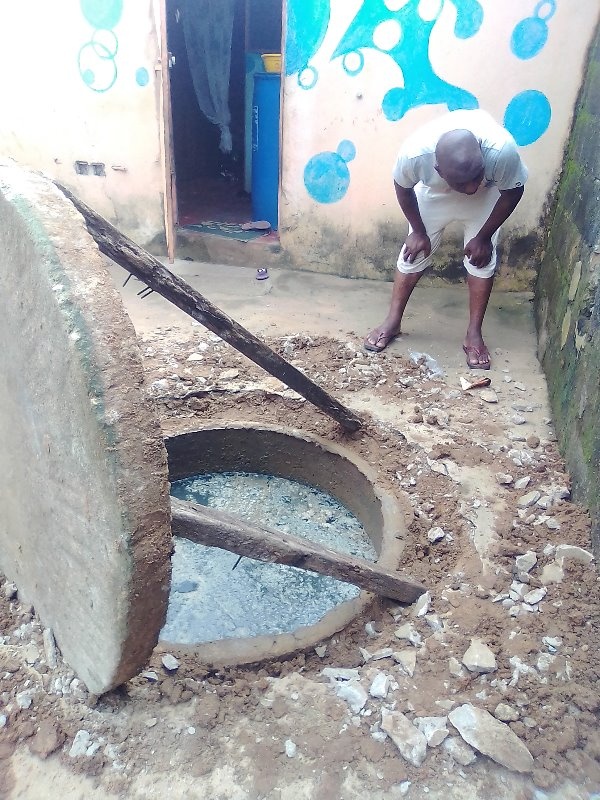
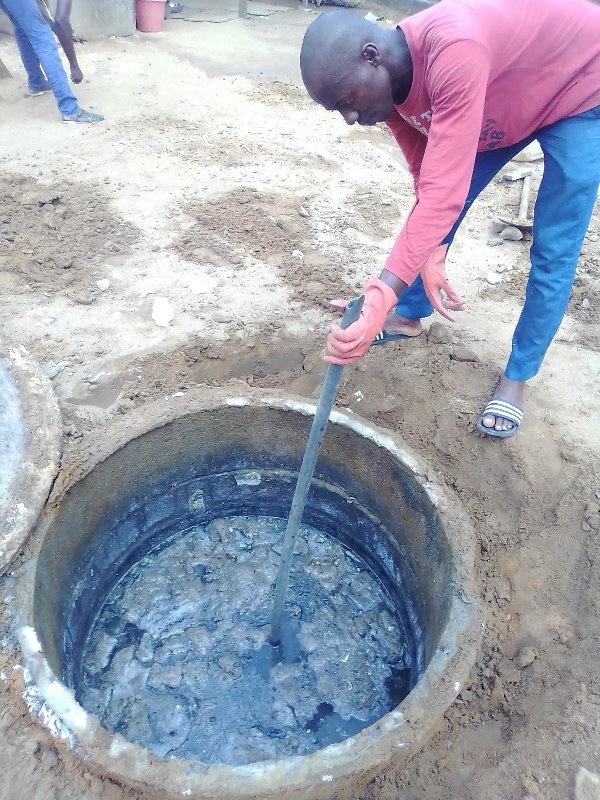
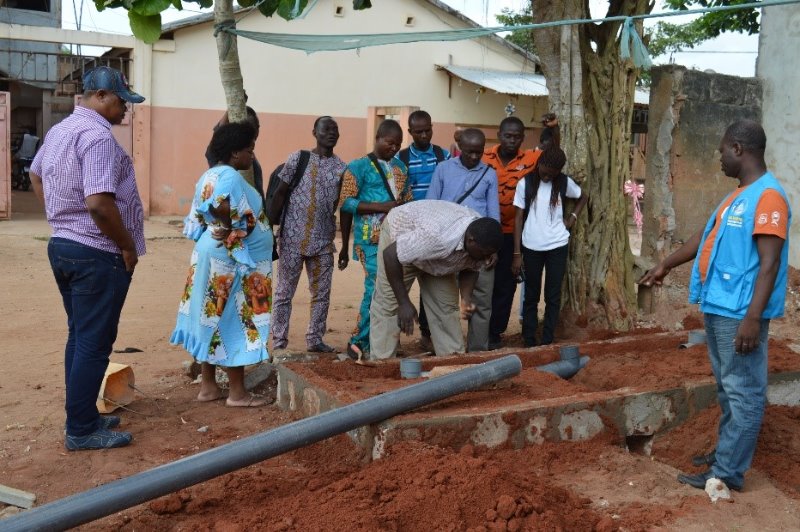
The SSD project recently conducted integrity tests of toilets and sanitation systems built by micro-contractors over two years ago. In Abidjan, this test was carried out in the municipality of Yopougon where the first sanitation facilities were constructed. This test involved eight structures including septic tanks and soak away pits and concluded that the septic tanks were filling normally.
The walls were still intact, with a good distribution of sludge in the compartments. As for the soak away pits, the test confirmed the initial hypothesis, namely, a good infiltration of the overflow from the septic tank into the ground, with intact concrete rings as they were installed. However, the water level in the pits was too high, which showed that the infiltration area must be increased. Improvements to the design are now being incorporated.
In Benin, SSD project technical team conducted a survey of 18 users of Mimin latrines to check the level of pit filling in the municipalities of Abomey-Calavy and Porto Novo. At the end of the survey, it was found that only 35% of the pit for double pit latrines were filled after two years of use, which is a good level. 94% of the customers visited during this survey said they were satisfied with the use of the WC Mimin.
BENIN/CÔTE D’IVOIRE : SSD teste l’intégrité des ouvrages d’assainissement réalisés au bénéfice des ménages au cours de l’année 5 de la mise en œuvre
Après plus de 2 ans d’utilisation, le projet SSD a effectué des tests d’intégrité dans le but de vérifier la conformité de la proposition de valeur sur les ouvrages d’assainissement réalisés par les micro entrepreneurs partenaires au sein des ménages clients. Dans la ville d’Abidjan, ce test a été réalisé dans une commune, notamment la commune de Yopougon où le projet a vu ses premiers ouvrages réalisés. Le test a concerné huit ouvrages comprenant des fosses septiques et des puits d’infiltration.
Au terme du test il a été conclu que les fosses septiques réalisées se remplissaient effectivement après au moins deux ans d’utilisation.
Les parois des murs étaient toujours intactes, avec une bonne répartition des boues selon les compartiments. Quant aux puits perdus, leur observation après deux ans d’utilisation confirme l’hypothèse de départ à savoir, une bonne infiltration du trop-plein d’eau provenant de la fosse septique dans le sol, avec des buses en béton intactes que lors de leur pose. Cependant, après les deux ans d’utilisation, le niveau d’eau dans le puits était de 90 cm sur 210 cm, cela montre qu’il faut augmenter la surface d’infiltration. Ce test démontre que le système doit être amélioré.
Au Bénin, l’équipe technique du projet SSD a réalisé un sondage auprès de 18 utilisateurs des latrines Mimin pour vérifier le niveau de remplissage des fosses dans les communes d’Abomey-Calavy et de Porto Novo. A l’issue de l’enquête, il a été constaté un niveau de remplissage des latrines à doubles fosses à hauteur de 35% après deux ans d’utilisation par un ménage. 94% des clients visité lors de cette enquête ont déclaré être satisfaits de l’utilisation des WC Mimin.
Attachments:
-
SepticTank...test.jpg
(Filesize: 180KB)
-
 Soakawaypi...est-.jpg
(Filesize: 172KB)
Soakawaypi...est-.jpg
(Filesize: 172KB)
-
 Soakawaypi...test.jpg
(Filesize: 175KB)
Soakawaypi...test.jpg
(Filesize: 175KB)
Please Log in to join the conversation.
You need to login to reply- USAIDssd
-
- SSD is a sanitation program funded by USAID, which aims to create sustainable sanitation market for the urban poor in Benin and Côte d'Ivoire. This market will elicit a demand for sanitation services and a reliable supply of high-quality sanitation products and services.
Less- Posts: 50
- Karma: 1
- Likes received: 9
Re: Paul Kpadonou: From Roadside Salesman to Millionaire Entrepreneur
Please Log in to join the conversation.
You need to login to reply
Re: Paul Kpadonou: From Roadside Salesman to Millionaire Entrepreneur

Vermifilter.com
www.vermifilter.com
Please Log in to join the conversation.
You need to login to reply- USAIDssd
-
- SSD is a sanitation program funded by USAID, which aims to create sustainable sanitation market for the urban poor in Benin and Côte d'Ivoire. This market will elicit a demand for sanitation services and a reliable supply of high-quality sanitation products and services.
Less- Posts: 50
- Karma: 1
- Likes received: 9
Re: Sanitation Service Delivery Program in Ghana, Ivory Coast and Benin - Updates
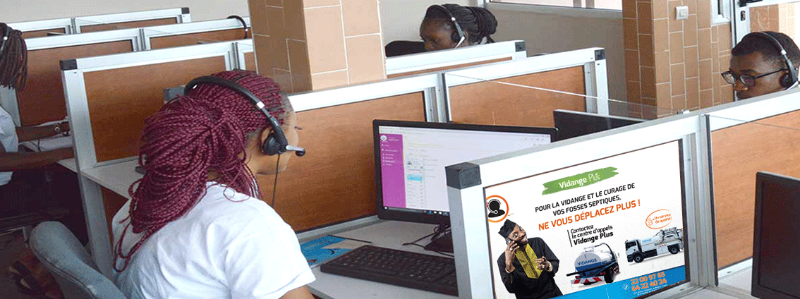
Improving Demand and Supply for Septic Tank Emptying Services
In Abidjan, septic tank emptying is done by informal private sector operators who deliver low-quality services at high and random prices resulting in irregular servicing and frequent overflowing. In addition to repugnant inconveniences and public health hazards associated with overflowing tanks, toxic waters spread in courtyards and neighborhoods, polluting the environment and threatening the health of its occupants, especially affecting children. Households find that Vacuum Truck Operators are difficult to locate when needed because of their limited numbers and scattered location around town. They lack professionalism and practice high and inconsistent pricing.
SSD Launches the “Vidange Plus” Call Center
In view of this situation, the SSD project has developed a business model that facilitates access and increases demand for septic tank emptying services and offers a higher quality service at more affordable and transparent prices. The “Vidange Plus” Call Center was launched in Abidjan in October 2017 and has since been bringing supply and demand closer together by connecting households with better-performing Vacuum Truck Operators.
Challenges
- Non-compliance with negotiated harmonized prices.
- Lack of high capacity Vacuum Trucks.
- Maintaining quality of service.
- Recovery of the commission to be paid to the Call Center by the Vacuum Truck Operators.
Successes
- 906 emptying services performed via the Call Center as of April 2019.
- 6,646,000 liters of fecal sludge collected and dumped.
- 13,157 people benefited from improved emptying services.
- 20,945,500 FCFA earned by the Vacuum Truck Operators.
Answering Calls and Taking Orders is Not Enough
Linking operators to households can not be the only benefit offered by the Call Center to the Vacuum Truck Operators. Other benefits that are important expense items for the operators must be included in a “basket” of benefits offered by joining the Call Center network and agreeing to the terms of a signed agreement (work and safety equipment, gas and health insurance rebates, communication credits, access to finance, etc.). The success of the Call Center business model cannot be achieved without the sum of tangible and intangible benefits received and perceived by the operators being at least equivalent to the 10% commission they have to pay to the Call Center.

Attachments:
-
call-cente...case.png
(Filesize: 531KB)
-
TEAM.jpg
(Filesize: 24KB)
Please Log in to join the conversation.
You need to login to reply- USAIDssd
-
- SSD is a sanitation program funded by USAID, which aims to create sustainable sanitation market for the urban poor in Benin and Côte d'Ivoire. This market will elicit a demand for sanitation services and a reliable supply of high-quality sanitation products and services.
Less- Posts: 50
- Karma: 1
- Likes received: 9
Re: Sanitation Service Delivery Program in Ghana, Ivory Coast and Benin - Updates
Current state of affairs:
We have completed product design and cost optimization of round concrete tanks (RCTs) and double offset leach pit latrines ensuring designs are well adapted to the local context, especially for the latter - based on the PSI/ABMS’ WC MIMIN toilets in Benin. Through this work, we have also ensured price points are market-based and affordable.
Additionally, we have setup systems for scaling up sales, including selection and training of toilet artisans and toilet sales agents. We have also strengthened the role of the micro-finance institution (Sinapi Aba MFI) in providing landlords and micro-entrepreneurs with funds to support the construction of sanitation facilities.
We are currently selling toilets with the support of 50 sales agents using a series of intensive promotional campaigns in 12 target municipalities. Uptake of toilets has so far been encouraging but we envisage increasing sales rates as we roll out all promotional activities and the newly setup structures gain adequate traction for increased sales.
• Biggest successes so far:
One of the key successes is the level of engagement with municipal governments on the project. The project continues to strengthen relatinships with municipal governments in instituting sustainable structures for the delivery of our sanitation products and services. Specifically, our partnership with municipal governments has enable them to play a key role in selecting toilet sales agents (TSAs) and artisans. As TSAs and artisans are pivotal to our sanitation service delivery, gaining credibility for them and project objectives through increased engagement in their selection and in community sensitization processes is crucial. The project actively engages municipal governments in promoting toilet through durbars and other toilet campaigns to generate interest in toilets.
The project continues to leverage on these partnerships with municipal governments to strengthen enforcement of local sanitation regulations, to stimulate demand for household toilets.
• Main challenges / frustration:
While interest in our sanitation product continues to increase, people do not often prioritize the installation of toilets in their compounds – there is no sense of urgency to construct toilets. Which makes it difficult to close deals.
This suggests the need for more active enforcement of sanitation bylaws to encourage landlords to build toilets. We support the EHSD in sanitation enforcement and we are also making arrangements with them to follow up on TSA visits where uptake has been low. This would include setting daily targets for environmental health officers (EHOs) to conduct follow-up visits that could include a one-month moratorium on prosecution or serving notices to households if they do not comply.
This we believe will encourage and compel landlords to prioritize their sanitation needs and construct toilets.
Please Log in to join the conversation.
You need to login to reply- USAIDssd
-
- SSD is a sanitation program funded by USAID, which aims to create sustainable sanitation market for the urban poor in Benin and Côte d'Ivoire. This market will elicit a demand for sanitation services and a reliable supply of high-quality sanitation products and services.
Less- Posts: 50
- Karma: 1
- Likes received: 9
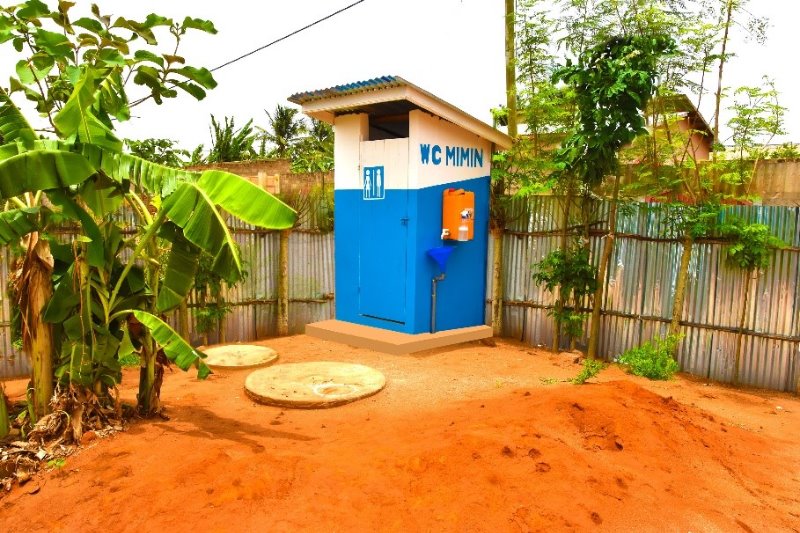
WC Mimin is a manual-flush latrine coupled with two alternating-use offset leach pits and a seated user interface that includes a SaTo pan. This improved latrine eliminates odors and keeps away flies and other insects that spread disease. This latrine is intended for low-income households living in urban and peri-urban areas in Benin.
Demand creation
The market-based approach used by the project aims to identify private operators and manufacturers of prefabricated building materials to produce a quality product. Through provision of training, equipment and start-up materials, the project seeks to turn existing micro entrepreneurs into sanitation product and service providers for the benefit of low-income households.
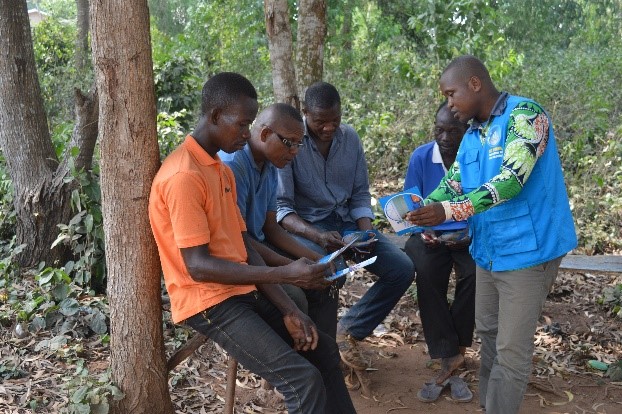
The demand creation strategy for "WC Mimin" is led by a team of 49 sales agents or community sanitation consultants for the two cities of Abomey-Calavi and Porto. These sales agents under the responsibility of a pool of 13 supervisors on the basis of one supervisor for every five sales agents or community sanitation advisors. The sales approach consists of conducting surveys by visiting households door-to-door to discuss their sanitation conditions, detect their sanitation troubles, make households realize the cost of their problems and then convince them to purchase ''WC Mimin'''.
Quality control strategy
Until April 2019, 2886 latrines were sold and installed in Abomey-Calavi and 313 in Porto Novo by micro entrepreneurs trained under the project. The project team ensures compliance with quality norms and standards by setting up several monitoring and control mechanisms. It should be noted that, after the perfect construction of 95% of latrines or latrine accessories without any failure the micro-entrepreneur can be declared capable of supplying "WC Mimin" products.
Quality controlTeam
SSD engineer and assistants are in charge of supervising and controlling the quality norms and standards for accessories and latrines built by artisans.
Masons, municipality hygiene officers, and the Environmental health officers are responsible for ensuring the quality of latrines built in a specific geographical area.
The various parties in charge of quality control determine a supervision schedule so that each actor is involved in the process to ensure compliance with norms and standards. The members of this team are involved simultaneously in different stages of the control process: before, during, and after construction.
Before construction
- The team ensures the quality of building materials, including cement and sand, and compliance with the designated dimensions of the molds for the defecation pot and slabs;
- The team conducts a strength test to measure the quality of the concrete used in prefabricated elements, carried out with a sclerometer or schmidt hammer. Following this test, non-conforming structures are destroyed.
During construction
- The team ensures proper adherence to certain requirements throughout the implementation of the WC Mimin latrines (distance between the pits, thickness of the concrete ring ,slab) and evaluates the skill of the mason.
After construction
Each quarter, the SSD team checks a sample of 25% of the latrines built to verify the value propositions of the Mimin brand, namely the absence of odors and the presence of a ventilation pipe and the hand washing device.
Indeed, once a month all the entrepreneur will be submit to a quality control check list witch is a several questions about the methodology and the technics to build ‘’WC Mimin’’.. Micro entrepreneurs were also provided a quality control reference guide, which includes the construction checklist as well as the required measurements and dimensions of materials used in the construction of latrines.
WC Mimin Latrine payment and way forward
In Abomey-Calavi as in Porto Novo, more than 90% of latrines have been installed thanks to the "Sanitation loans". A fund granted by SSD project to a microfinance to provide loans to needy households to finance their latrine construction. The household commits to refunds the loans to PEBco microfinance according to a clearly defined schedule.
This experience was a real success in Benin, since apart from the USD 10,000 fund granted by SSD, microfinance injected its own funds for a value of USD 238,940. This strong commitment of the financial partner is consistent with the results achieved with a credit recovery rate of 95.30%.
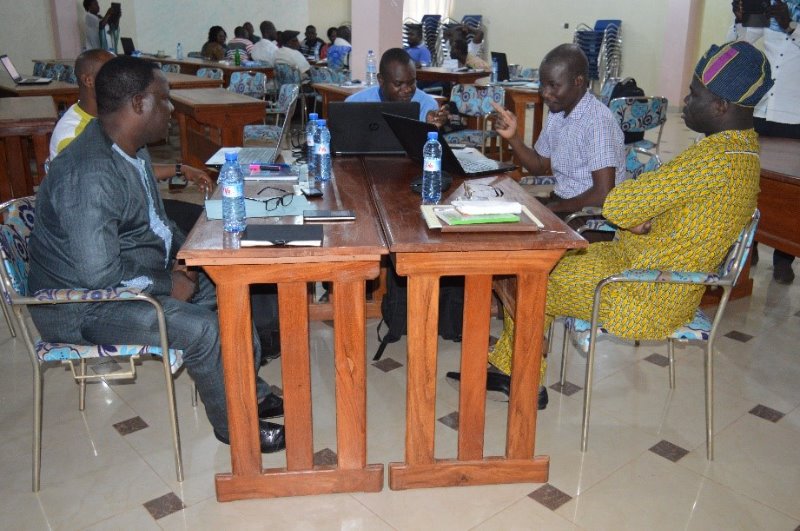
SSD project is scheduled to be completed in September 2019. In Benin, the SSD team organized a workshop with project stakeholders (entrepreneurs and microfinance PEBco), government stakeholders and municipalities to discuss how the project will be preserved and perpetuated once the SSD is completed. A sustainability plan should be developed on this subject to guide the actions to be taken.
Attachments:
-
PHOTO3.jpg
(Filesize: 102KB)
-
PHOTO1-1.jpg
(Filesize: 118KB)
-
PHOTO1.jpg
(Filesize: 129KB)
-
PHOTO2.jpg
(Filesize: 116KB)
Please Log in to join the conversation.
You need to login to reply- USAIDssd
-
- SSD is a sanitation program funded by USAID, which aims to create sustainable sanitation market for the urban poor in Benin and Côte d'Ivoire. This market will elicit a demand for sanitation services and a reliable supply of high-quality sanitation products and services.
Less- Posts: 50
- Karma: 1
- Likes received: 9
Re: Sanitation Service Delivery Program in Ghana, Ivory Coast and Benin - Updates
The standardization of septic tank emptying methods is a major concern for the Beninese government. In Abomey-calavi, Cotonou and Porto Novo, 35 sewage sludge operators had their methods and tools controlled by a joint mission consisting of a representative of the Ministry of Health, the focal point of the municipality of Cotonou and a representative of the office of the Beninese sewers' association. The objective of this supervision visit was to ensure the effective implementation of the "Mimin Emptying" quality standards by the emptyers in order to upgrade them. These include, among other things, the quality of the emptying service, price compliance and the wearing of personal protective equipment. Vidange Mimin is an innovative service that connects households via a telephone platform that allows them to easily access sewage sludge trucks. This service is implemented as part of the Sanitation Service Delivery (SSD) urban sanitation project.[/left][/right]
Please Log in to join the conversation.
You need to login to reply- USAIDssd
-
- SSD is a sanitation program funded by USAID, which aims to create sustainable sanitation market for the urban poor in Benin and Côte d'Ivoire. This market will elicit a demand for sanitation services and a reliable supply of high-quality sanitation products and services.
Less- Posts: 50
- Karma: 1
- Likes received: 9
Re: Sanitation Service Delivery Program in Ghana, Ivory Coast and Benin - Updates
On the occasion of the celebration of International Women's Rights Day around the world on March 8, several women's associations in the cities of Abidjan, Bouaké and Yamoussoukro organized a major awareness-raising ceremony for better access to sanitation in collaboration with the Sanitation Service Delivery urban sanitation project. In Côte d'Ivoire, according to the 2016 JMP report, only 36% of the population has access to a sanitation system. On the occasion of this commemorative day, the women advocated for better access to toilets and sanitation facilities. Lack of sanitation increases the risk of disease and malnutrition, especially for women and children. Women and girls face the risk of assault and rape because they do not have access to toilets that preserve their privacy. Since its implementation, the SSD project, with the support of the sector, has enabled the construction of nearly 2500 latrines in Côte d'Ivoire among low-income households.
Please Log in to join the conversation.
You need to login to reply- USAIDssd
-
- SSD is a sanitation program funded by USAID, which aims to create sustainable sanitation market for the urban poor in Benin and Côte d'Ivoire. This market will elicit a demand for sanitation services and a reliable supply of high-quality sanitation products and services.
Less- Posts: 50
- Karma: 1
- Likes received: 9
Re: Sanitation Service Delivery Program in Ghana, Ivory Coast and Benin - Updates
Please Log in to join the conversation.
You need to login to reply- USAIDssd
-
- SSD is a sanitation program funded by USAID, which aims to create sustainable sanitation market for the urban poor in Benin and Côte d'Ivoire. This market will elicit a demand for sanitation services and a reliable supply of high-quality sanitation products and services.
Less- Posts: 50
- Karma: 1
- Likes received: 9
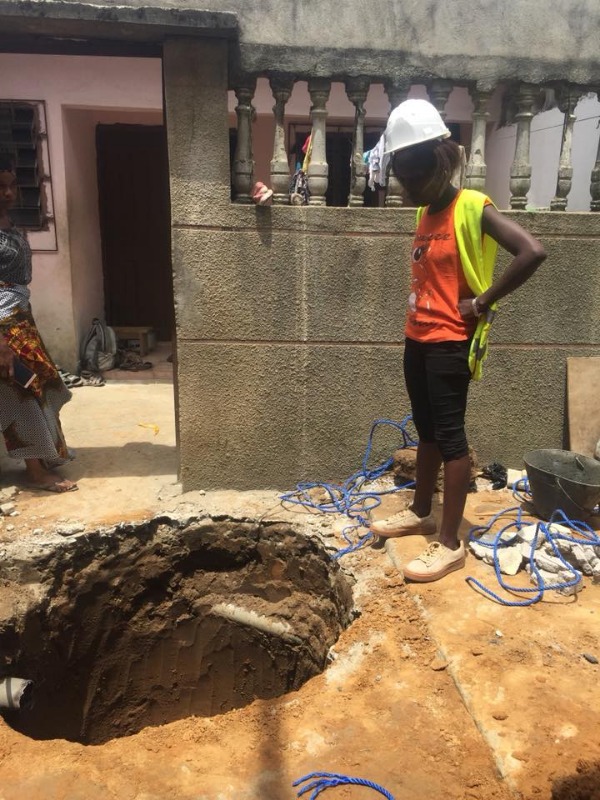
“Initially, many people tried to discourage me by saying that it was a job for men, but I didn’t give up,” says Ayé Judith Bodou.
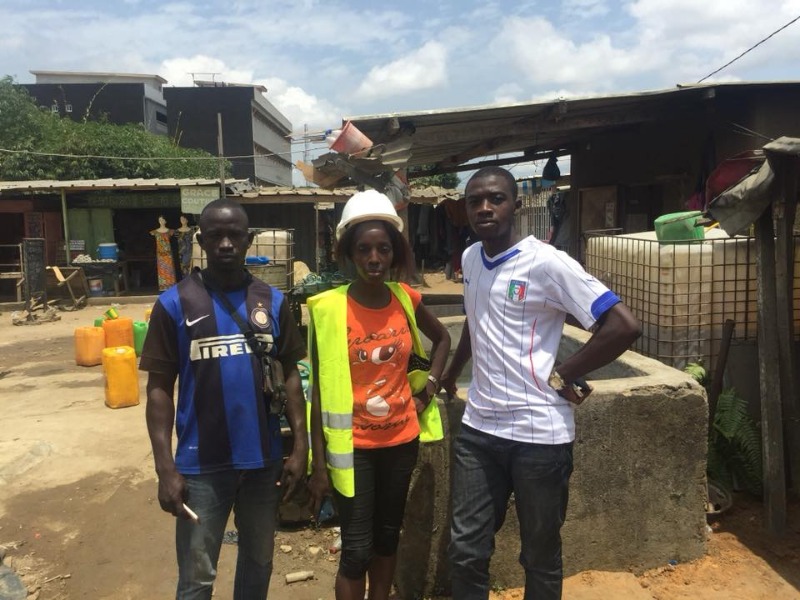
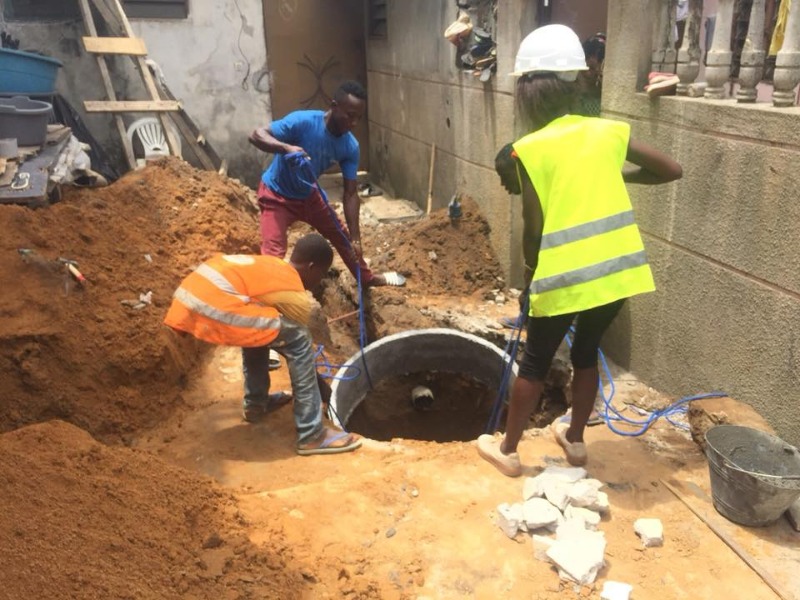
Dressed in her fluorescent green vest and protective helmet, Judith leads a team of nine workers, all men, building septic tanks, soak pits and toilets in Abidjan, Côte d’Ivoire. Among these workers are 3 masons, 3 plumbers and 3 assistants.
Judith is a trained plumber who decided to use her skills to become a sanitation entrepreneur. She is the only woman working under the socially marketed SaniPlus brand launched nationwide in 2018. The brand of adapted and quality sanitation products and services was developed and is supported by the USAID funded Sanitation Service Delivery (SSD) Project implemented across West Africa by Population Services International (PSI), PATH, and Water and Sanitation for the Urban Poor.
After attending a SaniPlus training, Judith decided to focus her business on fabricating and installing SaniPlus products. A few weeks later, the SaniPlus sales team referred her to a customer who wanted to install a soak pit for a household in Abobo to separate shower water from toilet water and reduce the need for frequent and expensive septic tank emptying services.
In one day, she moulded on location at the household the 7 concrete rings required for the soak pit construction completed 2 days when the rings had cured. The end-product met the SaniPlus quality standards, providing an environmentally safe and long-lasting sanitation solution. The client, Mr. Bakayoko Mamadou, is truly satisfied with the product and expects that it will save him money by making his septic tank fill more slowly and won’t have to pay to have it emptied every month as he did in the past. He even recommended Judith to his relative Ouedraogo Assata. At Ouédraogo’s house there was already a soak pit, but it wasn’t enough to meet the compound’s needs. After analysis, Judith suggested that she could connect a second soak pit to the existing system. Three days later,the work was completed, and the new pit was in use.
Thanks to Judith’s impeccable work and dedication, Mr. Bakayoko continued to promote SaniPlus soak pits in his neighbourhood. Judith’s expertise also helped Mr. Tindo Issouf’s family. In the past, his family used septic tank emptying services every two weeks to reduce the quantity of water in their septic tank. This frequent emptying was financially taxing on Mr. Tindo and his family. After learning about the SaniPlus soak pit, Mr. Tindo Issouf liked the idea of installing an infiltration pit next to the septic tank he owns.
In less than a week, Judith completed three Sani Plus jobs. Today, Judith is optimistic about the potential growth for her business and has expanded to conducting door-to-door sales and promotion visits to offer Sani Plus products and services to new clients. To date, she has built 23 soak pits in total. She is determined to take her business to the next level of success, and this time, with other women alongside her. “I intend to encourage other women who want to do something in the field of entrepreneurship so that we can build toilets and sanitation facilities together!”
Attachments:
-
femaleentepreneur.jpg
(Filesize: 169KB)
-
 Femaleentr...sons.jpg
(Filesize: 132KB)
Femaleentr...sons.jpg
(Filesize: 132KB)
-
 femaleentr...eur2.jpg
(Filesize: 141KB)
femaleentr...eur2.jpg
(Filesize: 141KB)
Please Log in to join the conversation.
You need to login to reply- USAIDssd
-
- SSD is a sanitation program funded by USAID, which aims to create sustainable sanitation market for the urban poor in Benin and Côte d'Ivoire. This market will elicit a demand for sanitation services and a reliable supply of high-quality sanitation products and services.
Less- Posts: 50
- Karma: 1
- Likes received: 9
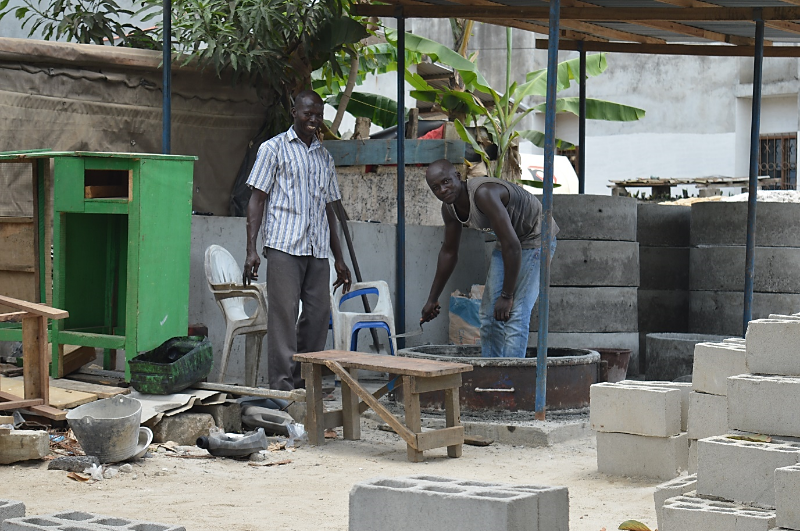
In early 2017, Seydou Bakayoko faced every small business owner’s nightmare.
A new, industrial brick production company had just moved into his neighborhood, and his business selling pre-fabricated building materials couldn’t keep up with the competition. It was failing.
Seydou started his small business twenty years ago in Yopougon, a low-income neighborhood in Abidjan, Côte d’Ivoire. After working in many different small trades, he was able to save money and set up a small, informal brick-making enterprise called Bakayoko Services. His bricks were used by contractors as the construction sector in Abidjan continued to grow.
Bakayoko Services produced between 500 and 600 each week to sell to contractors, who purchased the bricks for their construction sites. Seydou could sell usually sell his entire weekly production of bricks in three days or less and took home a profit of up to US$52—a decent income for his family.
But Seydou’s success came to an abrupt halt when a large brick production company moved into Yopougon. With a high production capacity and sophisticated logistical support, the company took over the entire brick market in Yopougon – a hard blow for Bakayoko Services. Seydou’s customers disappeared and his profits dwindled; his once lucrative weekly production started to take a month to sell out.
After four months with his failing business in the red, Seydou was contacted by SaniPlus, a socially marketed brand of sanitation products and services. They were looking for manufacturers and entrepreneurs in Yopougon to scale up their business model, and wanted to use Bakayoko Services as a test site for the pre-fabrication of products.
At first, Seydou was hesitant. “The bricks didn’t work at first, and some of my masons threatened to leave,” he remembers. “So, I asked two masons to stay so that we could test the SaniPlus nozzles…After a few weeks, I received my first orders from customers. I realized [SaniPlus] was a good business.”
SaniPlus was developed as part of the USAID Sanitation Service Delivery (SSD) project, a regional urban sanitation project being implemented in Benin, Côte d’Ivoire, and Ghana by PSI in collaboration with PATH and Water and Sanitation for the Urban Poor (WSUP).
The SSD project provided Mr. Bakayoko with practical training and a starter kit to manufacture concrete rings used in the installation of septic tanks, infiltration soak pits and double pit leach latrines. Contractors who install SaniPlus soak pits and latrines come to Bakayoko Services to buy materials.
Once he started manufacturing SaniPlus products, Seydou was once again back in business. He began earning his previous weekly income of up to US$56—a living wage for Seydou and his family.
A few months after the launch of SaniPlus sales and promotion activities in Yopougon, the number of purchases increased, and the market for SaniPlus products is now steadily growing. Bakayoko Services receives orders for 3 to 4 soak pits per week, which translates to the creation of 28 new concrete rings. To better meet the demand for concrete rings, Bakayoko decided to double his production and train three of his workers to make the rings.
By the end of 2018, 78 soak pits were installed in homes across Yopougon, providing environmentally safe and long-lasting sanitation solutions to each new household. Bakayoko Services made 50 of the concrete rings used for these pits.
With the sanitation market continually growing, Bakayoko Services sees a promising future in concrete ring making.
“Today, thanks to SSD, many masons have changed the way they work. They use concrete rings to make wells now, instead of bricks, and they last much longer. I’m very happy,” Seydou gleams.
Attachments:
-
bakus.png
(Filesize: 855KB)
Please Log in to join the conversation.
You need to login to reply- Elisabeth
-
- User is blocked
- Freelance consultant since 2012
Less- Posts: 3372
- Karma: 54
- Likes received: 932
Re: Breaking down barriers: the story of a female entrepreneur
I have moved your post into the existing thread about your project ("Sanitation Service Delivery (SSD) Project") to keep it all together (is there a website link where people can find out more about this story?). I see the project is coming to an end in September this year, so there must be lots of results to share now?
Could you please provide an update to this (which was posted by you in November 2016):
• Current state of affairs:
Project is in the live prototype stage, trialing Prefabricated Septic Tanks (PST) in Cote d’Ivoire and Ghana, and Ventilated Improved Pit (VIP) latrines with the SaTo Pan as an interface in Benin.
• Biggest successes so far:
Project continues to strengthen its engagement with governments in all three countries of operation.
• Main challenges / frustration:
Finding private sector solutions that are affordable to low-income customers in our coverage areas: project cannot subsidize.
Thanks a lot,
Elisabeth
Freelance consultant on environmental and climate projects
Please Log in to join the conversation.
You need to login to reply- Forum
- categories
- Markets, finance and governance
- Sanitation as a business and business models
- Progress so far ... Sanitation Service Delivery Program (PSI with PATH and WSUP, funded by USAID) - Ghana, Ivory Coast and Benin