









- Equity, inclusion and sanitation workers
- Sanitation workers
- Health and safety aspects for sanitation workers
- Design, Operation and Maintenance Guidelines for Garima Griha: Welfare Facilities for Sanitation Workers in Odisha, India
Design, Operation and Maintenance Guidelines for Garima Griha: Welfare Facilities for Sanitation Workers in Odisha, India
1479 views


Design, Operation and Maintenance Guidelines for Garima Griha: Welfare Facilities for Sanitation Workers in Odisha, India
Design, Operation and Maintenance Guidelines for Garima Griha: Welfare Facilities for Sanitation Workers in Odisha, India
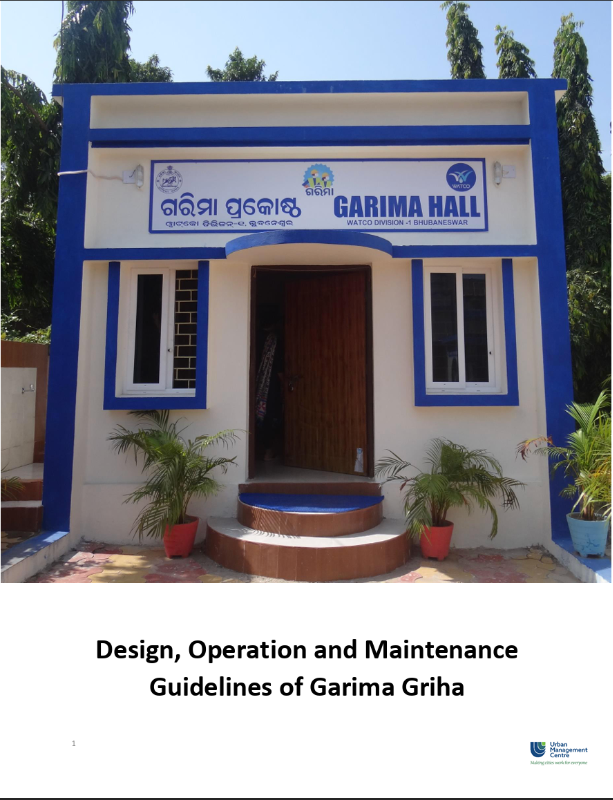
Sanitation workers often perform their duties in hazardous environments with limited access to safe spaces for changing, washing, resting, or storing personal protective equipment (PPE). To address these challenges, the Government of Odisha established Garima Grihas—dedicated welfare and support facilities designed for sanitation workers.
This publication presents detailed Design, Operation and Maintenance (O&M) Guidelines for planning, constructing, and managing Garima Grihas across urban local bodies.
About Garima Griha
Garima Grihas serve as dedicated worker support centres that provide:
• PPE washing and drying areas
• Gender-segregated changing rooms
• Toilets and bathing facilities
• Secure storage lockers
• Resting spaces
• Safe drinking water
• Information and awareness materials on occupational safety
The guidelines were developed under Odisha's Garima Programme, which aims to improve the safety, dignity, and wellbeing of sanitation workers.
Role of UMC
The Urban Management Centre (UMC) provided technical support to the Government of Odisha in conceptualising, documenting, and developing these design and operational guidelines. The document draws upon field experience from Garima Grihas established across Odisha and translates those learnings into a practical reference for cities and sanitation agencies.
What the publication covers
• Site selection and accessibility criteria
• Architectural and spatial planning standards
• PPE wash and drying facilities
• Gender-responsive changing rooms and toilets
• Resting and welfare spaces
• Safety, lighting and ventilation requirements
• Water supply and plumbing specifications
• O&M protocols and staffing responsibilities
• Indicative monthly operating costs
Why this resource matters
While considerable attention is often given to sanitation infrastructure, worker welfare infrastructure remains underdeveloped. Garima Griha offers a practical model for creating safe, dignified, and worker-centric facilities that can be replicated by cities and utilities seeking to strengthen occupational health and safety systems.
📘 Access the publication:
Sanitation Worker Compendiums – Urban Management Centre
We invite SuSanA members to share examples of sanitation worker welfare facilities, rest centres, changing facilities, and worker-support infrastructure from their own contexts.
— Meghna Malhotra
Deputy Director, Urban Management Centre (UMC), India
Sanitation workers often perform their duties in hazardous environments with limited access to safe spaces for changing, washing, resting, or storing personal protective equipment (PPE). To address these challenges, the Government of Odisha established Garima Grihas—dedicated welfare and support facilities designed for sanitation workers.
This publication presents detailed Design, Operation and Maintenance (O&M) Guidelines for planning, constructing, and managing Garima Grihas across urban local bodies.
About Garima Griha
Garima Grihas serve as dedicated worker support centres that provide:
• PPE washing and drying areas
• Gender-segregated changing rooms
• Toilets and bathing facilities
• Secure storage lockers
• Resting spaces
• Safe drinking water
• Information and awareness materials on occupational safety
The guidelines were developed under Odisha's Garima Programme, which aims to improve the safety, dignity, and wellbeing of sanitation workers.
Role of UMC
The Urban Management Centre (UMC) provided technical support to the Government of Odisha in conceptualising, documenting, and developing these design and operational guidelines. The document draws upon field experience from Garima Grihas established across Odisha and translates those learnings into a practical reference for cities and sanitation agencies.
What the publication covers
• Site selection and accessibility criteria
• Architectural and spatial planning standards
• PPE wash and drying facilities
• Gender-responsive changing rooms and toilets
• Resting and welfare spaces
• Safety, lighting and ventilation requirements
• Water supply and plumbing specifications
• O&M protocols and staffing responsibilities
• Indicative monthly operating costs
Why this resource matters
While considerable attention is often given to sanitation infrastructure, worker welfare infrastructure remains underdeveloped. Garima Griha offers a practical model for creating safe, dignified, and worker-centric facilities that can be replicated by cities and utilities seeking to strengthen occupational health and safety systems.
📘 Access the publication:
Sanitation Worker Compendiums – Urban Management Centre
We invite SuSanA members to share examples of sanitation worker welfare facilities, rest centres, changing facilities, and worker-support infrastructure from their own contexts.
— Meghna Malhotra
Deputy Director, Urban Management Centre (UMC), India
Meghna Malhotra
Deputy Director, Urban Management Centre (UMC) – Ahmedabad, India
Urban Management Centre (UMC) is a not-for-profit organisation working with national and state governments to build capacities for inclusive and resilient urban governance.
Over the past decade, UMC has supported transformative sanitation initiatives such as:
• Garima (Odisha) – ensuring safety, dignity, and inclusion of sanitation workers
• Sanitation Workers Development Scheme (Tamil Nadu) – institutionalising welfare systems
• NAMASTE – supporting the national mission for sanitation worker empowerment
• City Livelihoods Action Plans (CLAP) – integrating urban livelihoods and gender inclusion
Visit: www.umcasia.org
Follow us: LinkedIn – Urban Management Centre
Deputy Director, Urban Management Centre (UMC) – Ahmedabad, India
Urban Management Centre (UMC) is a not-for-profit organisation working with national and state governments to build capacities for inclusive and resilient urban governance.
Over the past decade, UMC has supported transformative sanitation initiatives such as:
• Garima (Odisha) – ensuring safety, dignity, and inclusion of sanitation workers
• Sanitation Workers Development Scheme (Tamil Nadu) – institutionalising welfare systems
• NAMASTE – supporting the national mission for sanitation worker empowerment
• City Livelihoods Action Plans (CLAP) – integrating urban livelihoods and gender inclusion
Visit: www.umcasia.org
Follow us: LinkedIn – Urban Management Centre
Attachments:
-
 DesignOper...ndia.png
(Filesize: 645KB)
DesignOper...ndia.png
(Filesize: 645KB)
Please Log in to join the conversation.
You need to login to reply
Share this thread:
- Equity, inclusion and sanitation workers
- Sanitation workers
- Health and safety aspects for sanitation workers
- Design, Operation and Maintenance Guidelines for Garima Griha: Welfare Facilities for Sanitation Workers in Odisha, India
Recently active users. Who else has been active?
Time to create page: 0.163 seconds