









- Forum
- categories
- Sanitation systems
- Toilets without urine diversion
- Container-based, mobile or bag-based toilets
- Toilets using biodegradable plastic bags
Toilets using biodegradable plastic bags
9562 views



Hi Everyone,
I just came across this analysis, by The Union of Concerned Scientists, of the advantages and disadvantages of biodegradable plastics, which I suggest should be read by anyone planning to build a toilet around such a product.
www.grinningplanet.com/articles/trash-re...s-of-bioplastics.htm
In summary:
// They are not really biodegradable, unless put into very specialized composting installations, of which there are only about 100 in the USA. (Elisabeth mentioned some time back on this Forum that some "biodegradable" plastic bags lasted years in her backyard compost pile). So they would only make sense in UDDTs if such specialized thermophilic composting is also done.
// They have a great impact on the environment, comparable to that of plastics made from petroleum (taking into account pesticide use, GMOs, competition with people who want to eat the plants that are made into plastic, etc.).
The Grinning Planet staff added a comment that the most environmentally friendly option is to use durable, reusable things ... like the reused and reusable woven polypropylene sacks that I use in UDDTs (which are also very economical and accessible, plus they allow for water vapor to evaporate out and oxygen to filter in).
I still question whether these "biodegradable" plastics actually break down entirely to natural compounds, without contaminating soil, air or water.
If people still want to use these "biodegradable" plastics in their UDDTs, the article gives suggestions of the most environmentally friendly options on the market (as of 2009).
((Simon,
For some reason, I did not see your response, until these new messages were moved to this thread.
// I think the Wayuu Culture in the Guajira cannot be more sensitive to feces than the Achuar here in the Amazon, who are accepting UDDTs relatively well ... and because of this sensitivity, they should obviously not want feces scattered on the ground or dissolved into the water. A key thing is to explain that UDDTs, as opposed to open defecation or flush toilets, jail up all the microscopic enemies until they die.
// If the toilets are off a bit into the vegetation, people will have their privacy and no one else needs to know what they are doing (as we do with the Achuar).
// I highly suggest building for the squatting position, as this is more higienic and it is the position they have always used (see the model we build for the Achuar in Pumpuentsa at inodoroseco.blogspot.com).
// The hot, dry conditions in the Guajira are great for pathogen die-off. I would recommend using the abundant dry ambient soil as cover material (even though recycled cover material is better, as I have mentioned before, but that would them freak out and, since the conditions are great, you do not need to use the very best cover material).
//From the videos on your great website, www.aguayuda.org, I have a better idea of the situation there and I now think that one of your best options is the ArborLoo, as long as there is no flooding, nor a high water table in the soil. Fruit trees could be planted in the full holes. Just a matter of making comfortable and acceptable lightweight privacy structures. (Also see my blog.)
))
Best wishes,
Chris Canaday
I just came across this analysis, by The Union of Concerned Scientists, of the advantages and disadvantages of biodegradable plastics, which I suggest should be read by anyone planning to build a toilet around such a product.
www.grinningplanet.com/articles/trash-re...s-of-bioplastics.htm
In summary:
// They are not really biodegradable, unless put into very specialized composting installations, of which there are only about 100 in the USA. (Elisabeth mentioned some time back on this Forum that some "biodegradable" plastic bags lasted years in her backyard compost pile). So they would only make sense in UDDTs if such specialized thermophilic composting is also done.
// They have a great impact on the environment, comparable to that of plastics made from petroleum (taking into account pesticide use, GMOs, competition with people who want to eat the plants that are made into plastic, etc.).
The Grinning Planet staff added a comment that the most environmentally friendly option is to use durable, reusable things ... like the reused and reusable woven polypropylene sacks that I use in UDDTs (which are also very economical and accessible, plus they allow for water vapor to evaporate out and oxygen to filter in).
I still question whether these "biodegradable" plastics actually break down entirely to natural compounds, without contaminating soil, air or water.
If people still want to use these "biodegradable" plastics in their UDDTs, the article gives suggestions of the most environmentally friendly options on the market (as of 2009).
((Simon,
For some reason, I did not see your response, until these new messages were moved to this thread.
// I think the Wayuu Culture in the Guajira cannot be more sensitive to feces than the Achuar here in the Amazon, who are accepting UDDTs relatively well ... and because of this sensitivity, they should obviously not want feces scattered on the ground or dissolved into the water. A key thing is to explain that UDDTs, as opposed to open defecation or flush toilets, jail up all the microscopic enemies until they die.
// If the toilets are off a bit into the vegetation, people will have their privacy and no one else needs to know what they are doing (as we do with the Achuar).
// I highly suggest building for the squatting position, as this is more higienic and it is the position they have always used (see the model we build for the Achuar in Pumpuentsa at inodoroseco.blogspot.com).
// The hot, dry conditions in the Guajira are great for pathogen die-off. I would recommend using the abundant dry ambient soil as cover material (even though recycled cover material is better, as I have mentioned before, but that would them freak out and, since the conditions are great, you do not need to use the very best cover material).
//From the videos on your great website, www.aguayuda.org, I have a better idea of the situation there and I now think that one of your best options is the ArborLoo, as long as there is no flooding, nor a high water table in the soil. Fruit trees could be planted in the full holes. Just a matter of making comfortable and acceptable lightweight privacy structures. (Also see my blog.)
))
Best wishes,
Chris Canaday
Conservation Biologist and EcoSan Promoter
Omaere Ethnobotanical Park
Puyo, Pastaza, Ecuador, South America
inodoroseco.blogspot.com
Omaere Ethnobotanical Park
Puyo, Pastaza, Ecuador, South America
inodoroseco.blogspot.com
Please Log in to join the conversation.
You need to login to reply- AFoote
-
- Innovating sanitation solutions to meet demand from BOP
Less- Posts: 16
- Karma: 3
- Likes received: 8
Hi SuSanA Community,
Has anyone had any experience with using plastic bags in dry toilets? I am interested in learning more about the advantages and disadvantages of using plastic bags to collect feces inside a toilet and to then empty the bag so it can be transported to a treatment facility so the feces can be treated and reused.
1. What types of bags did you use?
2. Are there certain types of biodegradable bags that compost more readily?
3. Does anyone know cost estimates for different types of plastic bags in Kenya or other low-income countries?
4. What would be some of the challenges with using bags as a way to collect feces within a dry toilet, emptying the bag when full, having it transported to a treatment facility and inserting a fresh bag?
5. I am aware of the PeePooPeople, but has anyone else conducted customer feedback studies on using plastic bags within toilets?
Thank you for your feedback and insight!
all the best,
Andrew
+++++++++++++++++
Note by moderator: I have moved Andrew's posting into an existing topic thread dealing with the same topic (which I found by using the search function). EvM
Has anyone had any experience with using plastic bags in dry toilets? I am interested in learning more about the advantages and disadvantages of using plastic bags to collect feces inside a toilet and to then empty the bag so it can be transported to a treatment facility so the feces can be treated and reused.
1. What types of bags did you use?
2. Are there certain types of biodegradable bags that compost more readily?
3. Does anyone know cost estimates for different types of plastic bags in Kenya or other low-income countries?
4. What would be some of the challenges with using bags as a way to collect feces within a dry toilet, emptying the bag when full, having it transported to a treatment facility and inserting a fresh bag?
5. I am aware of the PeePooPeople, but has anyone else conducted customer feedback studies on using plastic bags within toilets?
Thank you for your feedback and insight!
all the best,
Andrew
+++++++++++++++++
Note by moderator: I have moved Andrew's posting into an existing topic thread dealing with the same topic (which I found by using the search function). EvM
Andrew Foote
Co-founder
www.sanivation.com
Co-founder
www.sanivation.com
Please Log in to join the conversation.
You need to login to reply- szimmer
-
Topic AuthorLess
- Posts: 6
- Likes received: 0
Re: Latrines using a biodegradeable bags:
Hi Chris,
Thanks for the quick response.
Your questions are good ones.
The area where we are working is called La Guajira, Colombia. We are looking for a good toilet solution for the rural indigenous communities. In general, the common toilet solution is water flush toilets built by the local government. Unfortunately, there is normally never enough water to use these toilets. They are also built way too small for the people. Having worked in this area for the last 5 years, we have seen hundreds of abandoned water-flush toilets. It is frustrating to see money wasted on solutions that are not sustainable.
La Guajira is a desert and very hot all year long. It is 85 to 95 degrees. It does have a rainy season, which usually lasts 2 months or so. We have chosen a community, which has no bathrooms right now. There is water in the community but not enough for water-flush toilets. The community has about 60 people or so. They expressed interest in a sanitation solution and together we want to build composting toilets that will be acceptable for the community. This is a pilot project so if it goes well, we would like to use this solution in other rural communities in La Guajira.
The Wayuu culture is very sensitive to seeing or touching human feces. Therefore, the composting toilet solution needs to keep this in mind. Also they are used to “going in the bushes” so space is also an important issue for them when using a toilet. Small, latrine cabins are not well liked either. Lastly, they do not like it when others know they are using the toilet. So a bathroom a bit further away from the house would be preferred.
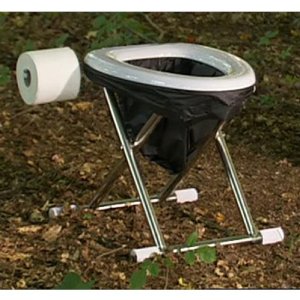
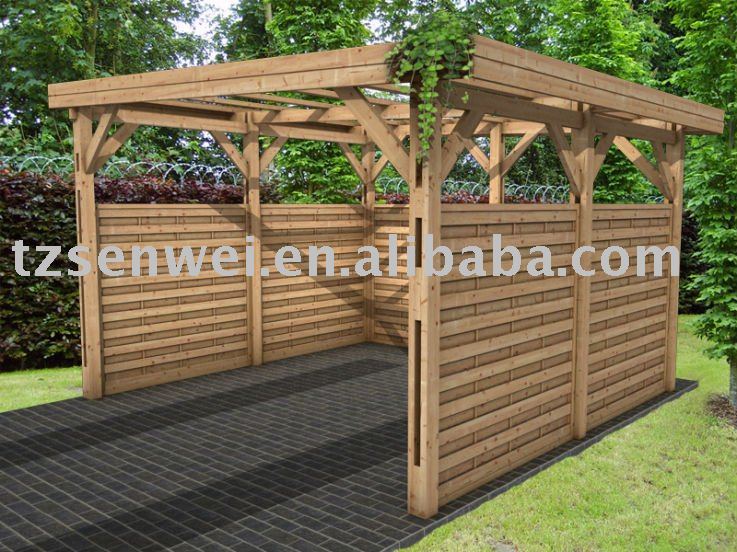
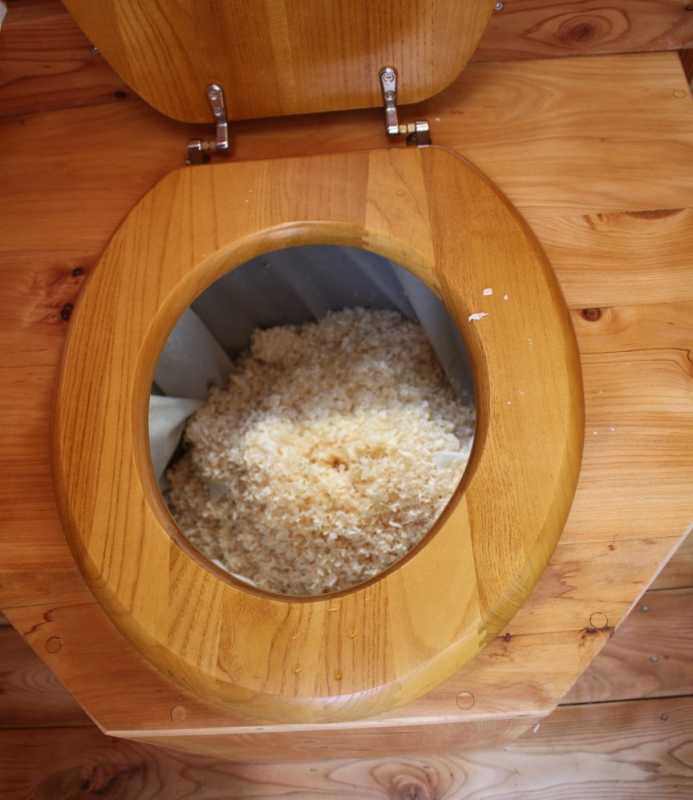
We have looked at all types of composting latrines, however in general cement and brick work is quite expensive for the La Guajira region. Wood is a common material in the area so we were thinking to build a carport type structure out of wood, which has a roof, and two walls for protection. We really like the bag idea with trash cans because it is easier to handle the feces and urine. This also avoids having to build an extra urinal, which costs more and makes the solution more complex. The disadvantage of such a toilet is that you have to buy the bio-bags. Though if bought in bulk, they are affordable and maybe in our investigation we can find a better solution for a bag like you have with your toilet. I am assuming your sack is not biodegradeable?
To answer your questions:
Do these plastics really break down entirely (even if conditions are not quite right)
Here is a link to the bags we were thinking of using:
www.buygreen.com/biobagnaturewastebags.aspx
Sounds like breaking down should not be an issue if composted properly.
How much petroleum goes into making and transporting them?
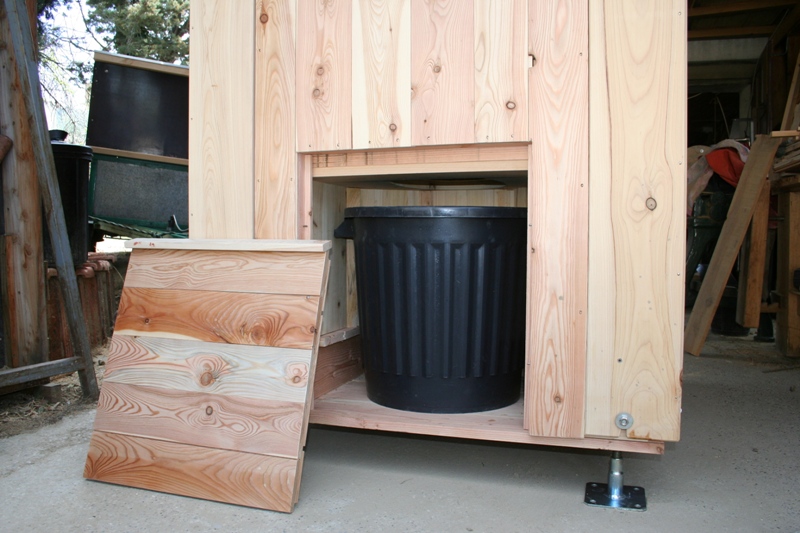
We have located one person in Colombia that sells the bags and travel toilet (see pictures)
What happens if they are not available for some reason?
Great question! As a backup plan until more bags are available is that they could dig a small hole and put the travel toilet over the hole and use it for their needs and then cover up the hole when they are done.
Thanks for your reply and look forward to more discussion. This helps a lot.
Best regards,
Simon
Thanks for the quick response.
Your questions are good ones.
The area where we are working is called La Guajira, Colombia. We are looking for a good toilet solution for the rural indigenous communities. In general, the common toilet solution is water flush toilets built by the local government. Unfortunately, there is normally never enough water to use these toilets. They are also built way too small for the people. Having worked in this area for the last 5 years, we have seen hundreds of abandoned water-flush toilets. It is frustrating to see money wasted on solutions that are not sustainable.
La Guajira is a desert and very hot all year long. It is 85 to 95 degrees. It does have a rainy season, which usually lasts 2 months or so. We have chosen a community, which has no bathrooms right now. There is water in the community but not enough for water-flush toilets. The community has about 60 people or so. They expressed interest in a sanitation solution and together we want to build composting toilets that will be acceptable for the community. This is a pilot project so if it goes well, we would like to use this solution in other rural communities in La Guajira.
The Wayuu culture is very sensitive to seeing or touching human feces. Therefore, the composting toilet solution needs to keep this in mind. Also they are used to “going in the bushes” so space is also an important issue for them when using a toilet. Small, latrine cabins are not well liked either. Lastly, they do not like it when others know they are using the toilet. So a bathroom a bit further away from the house would be preferred.
We have looked at all types of composting latrines, however in general cement and brick work is quite expensive for the La Guajira region. Wood is a common material in the area so we were thinking to build a carport type structure out of wood, which has a roof, and two walls for protection. We really like the bag idea with trash cans because it is easier to handle the feces and urine. This also avoids having to build an extra urinal, which costs more and makes the solution more complex. The disadvantage of such a toilet is that you have to buy the bio-bags. Though if bought in bulk, they are affordable and maybe in our investigation we can find a better solution for a bag like you have with your toilet. I am assuming your sack is not biodegradeable?
To answer your questions:
Do these plastics really break down entirely (even if conditions are not quite right)
Here is a link to the bags we were thinking of using:
www.buygreen.com/biobagnaturewastebags.aspx
Sounds like breaking down should not be an issue if composted properly.
How much petroleum goes into making and transporting them?
We have located one person in Colombia that sells the bags and travel toilet (see pictures)
What happens if they are not available for some reason?
Great question! As a backup plan until more bags are available is that they could dig a small hole and put the travel toilet over the hole and use it for their needs and then cover up the hole when they are done.
Thanks for your reply and look forward to more discussion. This helps a lot.
Best regards,
Simon
Attachments:
-
 Alternativa.jpg
(Filesize: 26KB)
Alternativa.jpg
(Filesize: 26KB)
-
 DisenoDeCabana1.jpg
(Filesize: 107KB)
DisenoDeCabana1.jpg
(Filesize: 107KB)
-
 BanoSeco2.jpg
(Filesize: 39KB)
BanoSeco2.jpg
(Filesize: 39KB)
-
 BanoSeco4.JPG
(Filesize: 194KB)
BanoSeco4.JPG
(Filesize: 194KB)
Please Log in to join the conversation.
You need to login to reply
Hi Simon,
Please tell us more about the project in Colombia. A lot depends on the specific climate and the specific users.
I have some doubts about systems based on biodegradable plastic bags.
#Do these plastics really break down entirely (even if conditions are not quite right)?
#How much petroleum goes into making and transporting them?
#What happens if they are temporarily not available for some reason?
I personally use woven, polypropylene sacks, which allow for gas exchange, thus helping the pile to stay dry and oxigenated. Thanks to the dry cover material, I have yet to see any liquids oozing out. These can be stored protected from rain. Unfortunately, one also has to protect them from the sun, since the UV destroys the sack. These could even be buried (as with the biodegradable bags) and, after a prudent time period, dig them up, empty them, and use them again. In Ecuador, I buy really good sacks that had held sugar, at the bakery for US$ 0.20.
If I can be of any help, I am not too far away, in Ecuador. You can see some of the models I build at www.inodoroseco.blogspot.com
Best wishes,
Chris Canaday
Please tell us more about the project in Colombia. A lot depends on the specific climate and the specific users.
I have some doubts about systems based on biodegradable plastic bags.
#Do these plastics really break down entirely (even if conditions are not quite right)?
#How much petroleum goes into making and transporting them?
#What happens if they are temporarily not available for some reason?
I personally use woven, polypropylene sacks, which allow for gas exchange, thus helping the pile to stay dry and oxigenated. Thanks to the dry cover material, I have yet to see any liquids oozing out. These can be stored protected from rain. Unfortunately, one also has to protect them from the sun, since the UV destroys the sack. These could even be buried (as with the biodegradable bags) and, after a prudent time period, dig them up, empty them, and use them again. In Ecuador, I buy really good sacks that had held sugar, at the bakery for US$ 0.20.
If I can be of any help, I am not too far away, in Ecuador. You can see some of the models I build at www.inodoroseco.blogspot.com
Best wishes,
Chris Canaday
Conservation Biologist and EcoSan Promoter
Omaere Ethnobotanical Park
Puyo, Pastaza, Ecuador, South America
inodoroseco.blogspot.com
Omaere Ethnobotanical Park
Puyo, Pastaza, Ecuador, South America
inodoroseco.blogspot.com
Please Log in to join the conversation.
You need to login to reply- szimmer
-
Topic AuthorLess
- Posts: 6
- Likes received: 0
Toilets using biodegradable plastic bags
Hello,
I was just at the World Water Forum in Marseille and really liked the bio-bag toilets that they had. They come from this company:
www.vente-toilettes-seches.com/images/photo_brute_0_500.html
We are working on designing a composting latrine for a small project in Colombia. We like the bag design because it is simple and lower cost solution compared to the typical two chamber composting latrine that is often used.
Do you know of any non-profits who have had experience with such toilets in rural communities?
Thanks for your time.
Best regards,
Simon Zimmer
I was just at the World Water Forum in Marseille and really liked the bio-bag toilets that they had. They come from this company:
www.vente-toilettes-seches.com/images/photo_brute_0_500.html
We are working on designing a composting latrine for a small project in Colombia. We like the bag design because it is simple and lower cost solution compared to the typical two chamber composting latrine that is often used.
Do you know of any non-profits who have had experience with such toilets in rural communities?
Thanks for your time.
Best regards,
Simon Zimmer
Please Log in to join the conversation.
You need to login to reply
Share this thread:
- Forum
- categories
- Sanitation systems
- Toilets without urine diversion
- Container-based, mobile or bag-based toilets
- Toilets using biodegradable plastic bags
Time to create page: 0.088 seconds