









- Forum
- categories
- Announcements and miscellaneous
- New publications (books, articles, websites, videos)
- Sanitation news in the RUAF Updates
Sanitation news in the RUAF Updates
6625 views


WASH - Bangladesh: Workshop on Productive Use of Wastes for Urban and Peri-Urban Agriculture
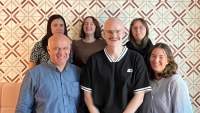
With Hope for the Poorest (HP-ASA), Practical Action Bangladesh (PAB), and WASTE, RUAF organised a workshop on Productive Use of Wastes for Urban and Peri-Urban Agriculture in Satkhira, Bangladesh on 28 April 2014. The workshop was a first collaborative activity of RUAF with the Bangladesh Urban WASH Alliance. About 30 participants, including farmers, city authorities, fertiliser suppliers, research and extension and various NGOs, discussed and agreed on specific WAH interventions in Satkira. Information on on-going work of RUAF partners in other countries, and on existing practices by Practical Action in Bangladesh were shared and discussed. RUAF, HP-ASA and PAB are currently working out a programme for the next year. For more information contac t: This email address is being protected from spambots. You need JavaScript enabled to view it.
Regards,
Sebastian Klos
Located at Deutsche Gesellschaft für Internationale Zusammenarbeit (GIZ) GmbH, Bonn, Germany
Follow us on facebook: www.facebook.com/susana.org, linkedin: www.linkedin.com/company/sustainable-sanitation-alliance-susana.
Please Log in to join the conversation.
You need to login to replyRUAF supported activities under the Dutch WASH Alliance (www.washalliance.nl)
In 2013 RUAF Foundation continues to collaborate with the WASH partners in Ghana (Tamale), Nepal (Surkhet), Ethiopia (Dire Dawa) and Kenya (Kajiado) on Safe and Productive Use of Wastes for Urban Agriculture. In addition to policy influencing and developing scenarios on Safe Reuse of Wastes in Urban and Peri-Urban Agriculture (UPA) for the selected cities and towns, RUAF and the local partners seek to identify and develop sanitation systems / busines s models for sanitation and waste reuse that fit within the development strategies of the city or town. RUAF Foundation supports the selection of promising systems, design of prototypes, development of capacity building materials and training activities, as well as close monitoring of the implementation activities. The selected systems in these countries are:
1) Integrated School Sanitation, with urine diversion, composting and gardening, and in some cases with Biogas and Rainwater harvesting (such as in Surkhet or Kajiado).
2) Public Sanitation, improving the safety and services of public toilets (with use and sale of urine or composted faecal sludge, as in Tamale, or the mobile toilet in Surkhet).
3) Eco-sanitation at household or community level, with own vegetable gardens or sale of co-compost to surrounding community (as in Tamale, Surkhet and Dire Dawa).
4) Improvement in current system of handling and treatment of solid organic waste and animal and human wastes (as in Kajiado and Dire Dawa) at community and city level.
More information: René van Veenhuizen: This email address is being protected from spambots. You need JavaScript enabled to view it.
Rgds
Trevor
Located at Deutsche Gesellschaft für Internationale Zusammenarbeit (GIZ) GmbH, Bonn, Germany
Follow us on facebook: www.facebook.com/susana.org, linkedin: www.linkedin.com/company/sustainable-sanitation-alliance-susana.
Please Log in to join the conversation.
You need to login to reply
With permission I have extracted the following news out of the latest RUAF Foundation Update #18 that is relevant to sustainable sanitation:
Use of Solid and Liquid Wastes for Urban and Peri-urban Agriculture
The WASH Alliance is formed by six Dutch Civil Society Organisations (CSOs) with extensive experience in Water Sanitation and Health (WASH). Visit: the WASH Alliance at: www.washalliance.nl RUAF is a thematic partner of the WASH alliance, specifically on the issue of productive use of household (waste-)water and organic solid wastes.
By “productive use” we refer to the (re)use of (waste)water and wastes for small scale agricultural production activities with the purpose to: i. secure household consumption and improve nutrition and/or, ii. generate income by bartering or selling the surplus produce, and in such a way, iii. reduce costs / generate income for WASH systems maintenance and provide jobs and income for people in the community, iv. improve natural resource management (resource recovery and reuse of precious resources).
Assessments and multi stakeholder meetings have been finalized in selected cities: Tamale in Ghana, Dire Dawa in Ethiopia, Birendranagar/Surkhet in Nepal and Kaijado in Kenya. Similarities in the opportunities and constraints in the development of water and sanitation and in the potential of productive re-use, were noted. Re-use systems which raised high interest included: enhancing soil fertility by use of animal and human manure and the multiple use of safe waste-water re-use at household or community level. In addition, the following needs were identified: enhancing the role of UPA (including re-use) in city development by awareness raising; support to city authorities in land use mapping, planning and zonification, and development of appropriate regulation; support to urban farmers and their organisations improving their access to water en nutrients and assisting them in value chain development. These activities have been agreed in work plans for 2013. An international sharing and learning workshop of the WASH partners is planned for May 2013.
More information: René van Veenhuizen: This email address is being protected from spambots. You need JavaScript enabled to view it.
Resource Recovery and Reuse: From Research to Implementation
RUAF’s partner IWMI and WHO collaborate in this SDC funded project. The two objectives of the project are:
• To increase the scale and viability of the productive reuse of water, nutrients, organic matter and energy from domestic and agro-industrial waste streams through the analysis, promotion and implementation of economically viable business models – IWMI led
• To safeguard public health in the context of rapidly expanding use of wastewater, excreta and grey-water in agriculture & aquaculture and protect vulnerable groups from specific health risks associated with this pattern of agricultural development – WHO led
The project in its first year analyzed existing business cases from across the globe in order to identify successful business models for their replication elsewhere. For this, IWMI, WHO and their Swiss partners SANDEC, Swiss TPH and CEWAS are undertaking in 2013 feasibility studies for business model implementation at largest possible scale in Hanoi, Kampala, Lima and Bangalore. The feasibility studies will go hand in hand with the development and testing of Sanitation Safety Plans to ensure safe waste reuse. An important target group for recovered nutrient and water resources are the urban farmers, but even more the larger group of peri-urban farmers to support large scale waste valorization. More information: Pay Drechsel, IWMI: This email address is being protected from spambots. You need JavaScript enabled to view it.
See the full call at www.ruaf.org.
You can send your contribution to the Editor UA-Magazine at This email address is being protected from spambots. You need JavaScript enabled to view it.
To read the entire Update online you can follow this link: www.ruaf.org/node/2415
Kind regards,
SuSanA secretariat.
[posted by Agazi Medhanie]
Located at Deutsche Gesellschaft für Internationale Zusammenarbeit (GIZ) GmbH, Bonn, Germany
Follow us on facebook: www.facebook.com/susana.org, linkedin: www.linkedin.com/company/sustainable-sanitation-alliance-susana.
Attachments:
-
RUAF.jpg
(Filesize: 19KB)
Please Log in to join the conversation.
You need to login to reply
With permission I have extracted the following news out of the latest RUAF Foundation Update #17 that is relevant to sustainable sanitation:
2.UPDATE ON ONGOING RUAF PROJECTS
WASH and Food Security
RUAF is a thematic partner in the Dutch WASH Alliance (DWA), which started in 2011 a major five year water and sanitation programme with co-funding from the Dutch Ministry of Foreign Affairs. The project seeks to sustainably improve access of the urban poor to water and sanitation. RUAF collaborates with DWA and partners in Nepal, Ghana, Kenya, and Ethiopia with a special focus on the productive use of household wastewater. With University of Development Studies in Ghana, ENPHO and BSP in Nepal, University of Nairoibi and Practical Action in Kenya, and HCS-Ripple in Ethiopia, assessments have been undertaken in Tamale (Ghana), Surkhet, (Nepal), Kajiado (Kenya), and Dire Dawa (Ethiopia). The results of the assessments have been discussed with multiple stakeholders in these cities as a start of joint planning of strategies and activities
More information with This email address is being protected from spambots. You need JavaScript enabled to view it. or visit the website at www.washalliance.nl
SWITCH
The EC co-funded SWITCH programme on Sustainable Urban Water management recently came to an end. RUAF partner ETC coordinated the action research and demonstrations in Lima, Beijing and Accra regarding productive use of waste and collected storm water in urban agriculture. Over the 6 years of SWITCH a wealth of information has been produced. The final report, a transition manual, a training kit and the book “SWITCH in the City”, as well as all major documents are available at: www.switchurbanwater.eu
To read the entire Update online you can follow this link: www.ruaf.org/node/23964. NEW ISSUES OF THE URBAN AGRICULTURE MAGAZINE
Call for No 26: Sustainable financing of urban water, sanitation and UPA
In no 25, we called for the next issue on “Sustainable Financing of Urban Water and Sanitation and Agriculture”. In this issue we will publish a number of articles related to innovative financing and business approaches related to the nexus of water, sanitation, energy and agriculture in an urban setting. But we can still accept your experiences also. The extended deadline is now: 1 July, 2012.
This issue of the UA-Magazine will be developed in cooperation with, and financially supported by, the Dutch WASH Alliance (DWA). Experiences on sustainable financing and business approach to sanitation, and on finance and business development in urban agriculture will included in this issue.
Linking water and sanitation, and solid waste management to food production offers opportunities for win-win situations by turning waste into productive resources, improve income and food situation of the poor, while potentially reducing the costs of waste management and reducing environmental damage due to waste disposal. Urban, peri-urban and rural producers need these low priced nutrients and irrigation water for their crops and animals (see earlier issues of the UA Magazine” 20, 21, 23). Increasingly there is agreement on the need for paradigm shifts from subsidies towards cost recovery in sanitation and from disposal to processing for reuse. Urban and peri-urban areas are hot spots for various resource recovery options. Challenges are in up-scaling, the economics of waste management and re-use; the involvement of various actors -first of all the private sector; and the need for appropriate regulation.
See the full call at www.ruaf.org.
You can send your contribution to the Editor UA-Magazine at This email address is being protected from spambots. You need JavaScript enabled to view it.
Rgds
Trevor
Located at Deutsche Gesellschaft für Internationale Zusammenarbeit (GIZ) GmbH, Bonn, Germany
Follow us on facebook: www.facebook.com/susana.org, linkedin: www.linkedin.com/company/sustainable-sanitation-alliance-susana.
Attachments:
-
RUAFlogo.png
(Filesize: 19KB)
Please Log in to join the conversation.
You need to login to reply- Forum
- categories
- Announcements and miscellaneous
- New publications (books, articles, websites, videos)
- Sanitation news in the RUAF Updates